
As an Amazon Associate we earn from qualifying purchases. Commissions never affect our picks. Read our affiliate disclaimer.
The best fridge cleaner lifts sticky spills from shelves and drawers without leaving fragrance or residue that could get into food. Inside the fridge, choose products listed as food-contact safe or no-rinse, and keep a separate stainless cleaner for the doors.
We compared fridge cleaners on Amazon on food-contact listings, ingredients, fragrance, size and owner feedback.
Quick Answer: The Best Fridge Cleaner
- Best OverallOh Yuk Fridge Cleaner
- Best DisinfectingCleanSmart Hypochlorous Spray
- Best EverydaySeventh Generation Free & Clear
- Best SanitizerLEXX Food Contact Sanitizer
- Best for ExteriorWeiman Stainless Spray
- Best Budget SanitizerFantastik No Rinse Sanitizer
Oh Yuk Fridge Cleaner is the best fridge cleaner for interiors: made for refrigerator shelves and drawers and listed as food-contact safe. CleanSmart hypochlorous spray disinfects with no harsh residue, Seventh Generation Free & Clear is fragrance free, LEXX and Fantastik No Rinse are food-contact sanitizers and Weiman is the pick for the stainless exterior.
Best Fridge Cleaner Comparison Table
| Product | Best For | Type | Key Feature | Buy |
|---|---|---|---|---|
| Oh Yuk Fridge Cleaner | Best Overall | Fridge interior cleaner | Made for fridges | Check Price |
| CleanSmart Hypochlorous Spray | Best Disinfecting | Food-safe disinfecting spray | Hypochlorous acid | Check Price |
| Seventh Generation Free & Clear | Best Everyday | Plant-based all-purpose spray | Free & Clear | Check Price |
| LEXX Food Contact Sanitizer | Best Sanitizer | No-rinse food-contact sanitizer | NSF A1, D2 | Check Price |
| Weiman Stainless Spray | Best for Exterior | Stainless cleaner and polish | Stainless polish | Check Price |
| Fantastik No Rinse Sanitizer | Best Budget Sanitizer | No-rinse food-contact sanitizer | NSF D1 | Check Price |
The 6 Products We Recommend
Remove the source of any smell first and read the label before you clean. Specs below come from each Amazon listing.

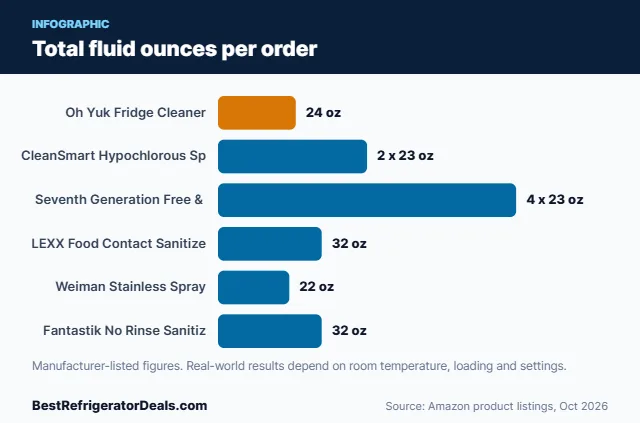
1. Oh Yuk Fridge Cleaner Spray, Food-Contact Safe, 24 oz
1. Oh Yuk lifts sticky messes.
👍 Pros & Cons
Pros
- Made for fridge interiors
- Food-contact safe listing
- Lifts sticky spills
- No heavy perfume
Cons
- Fewer reviews
- Pricier per ounce
- Not for exterior stainless
📄 Detailed Review
- Size: 24 fl oz
- Surfaces: Inside fridge: plastic drawers, glass shelves
- Safety: Food-contact safe (listed)
- Formula: Biodegradable, vegan
- Scent: Light, odor neutralizing
- Reviews: About 150 (listed)
Oh Yuk is a spray made for fridge interiors that lifts sticky spills and dried food from shelves and drawers and is listed as safe for food-contact surfaces.
Food-contact safe.

2. CleanSmart Daily Surface Cleaner and Disinfectant, Hypochlorous Acid, 23 oz, 2 Pack
2. CleanSmart is food-safe.
👍 Pros & Cons
Pros
- Safe to spray around food
- No harsh residue
- Fragrance free
- Very popular
Cons
- Cleans light messes, not heavy grease
- Needs contact time to disinfect
- Spray only
📄 Detailed Review
- Size: 2 x 23 fl oz
- Active: Hypochlorous acid
- Claim: Kills 99.9% of viruses and bacteria (listed)
- Residue: Breaks down to saline (maker claim)
- Free of: Alcohol, ammonia, bleach, fragrance, dyes
- Reviews: Over 15,000 (listed)
CleanSmart’s hypochlorous spray disinfects fridge shelves and handles without bleach or fragrance and breaks down to a saline solution, per the maker.
No fragrance.

3. Seventh Generation All Purpose Cleaner, Free & Clear, 23 oz, 4 Pack
3. Seventh Generation is gentle.
👍 Pros & Cons
Pros
- No fragrance to taint food
- Works inside and outside the fridge
- Four bottles
- Trusted brand
Cons
- Not a sanitizer
- Light grease power
- Wipe and rinse food areas
📄 Detailed Review
- Size: 4 x 23 fl oz
- Scent: Free & Clear (no dyes or fragrance)
- Surfaces: Counters, stainless, glass, sealed surfaces
- Formula: Plant-powered
- Finish: Streak free
- Reviews: Over 2,000 (listed)
Seventh Generation’s Free & Clear spray cleans fridge shelves, drawers and stainless doors without dyes or fragrance that could linger near food.
4-pack.

4. LEXX Food Contact Surface Sanitizer and Cleaner Spray, EPA Registered, 32 oz
4. LEXX needs no rinse.
👍 Pros & Cons
Pros
- NSF listed for food-contact
- No rinse
- Citric acid based
- Fast sanitizing
Cons
- Fewer reviews
- Sanitizer more than degreaser
- Pro-style bottle
📄 Detailed Review
- Size: 32 fl oz
- Listing: EPA registered, NSF Category A1, D2
- Active: Citric acid
- Claim: Kills 99.999% of bacteria in 1 minute (listed)
- Rinse: No rinse required
- Scent: Unscented
LEXX is an EPA-registered, NSF-listed citric acid sanitizer that cleans and sanitizes food-contact surfaces such as fridge shelves with no rinse.
Citric acid.

5. Weiman Stainless Steel Cleaner and Polish Spray With Microfiber Cloth, 22 oz
5. Weiman shines doors.
👍 Pros & Cons
Pros
- Cleans and polishes in one step
- Leaves a fingerprint barrier
- Cloth included
- Hugely popular
Cons
- Oily feel if over-applied
- Not for fridge interior
- Buff with the grain
📄 Detailed Review
- Size: 22 fl oz
- Formula: pH neutral, PCE free
- Finish: Streak free, anti-fingerprint
- Extras: Microfiber cloth
- Award: 2026 Good Housekeeping Cleaning Award (maker claim)
- Reviews: Over 19,000 (listed)
Weiman’s stainless spray removes fingerprints, grease and water spots and leaves a protective polish, and it comes with a microfiber cloth.
Cloth included.

6. SC Johnson Professional Fantastik No Rinse Disinfectant Sanitizer, 32 oz
6. Fantastik is fragrance free.
👍 Pros & Cons
Pros
- No rinse on food surfaces
- Fragrance free
- No bleach
- Low price
Cons
- Few reviews
- Made for pro kitchens
- Not a degreaser
📄 Detailed Review
- Size: 32 fl oz
- Listing: NSF D1 (listed)
- Rinse: No rinse needed
- Free of: Bleach and alcohol
- Scent: Fragrance free
- Use: Hard, non-porous kitchen surfaces
SC Johnson Professional’s Fantastik No Rinse is a fragrance-free, NSF D1 sanitizer for hard kitchen surfaces, made without bleach or alcohol.
No rinse.
How We Chose the Best Fridge Cleaner
To choose the best fridge cleaner, we compared refrigerator cleaning and odor-control products sold on Amazon in the U.S.: coil brushes, deodorizers, interior cleaners, food-contact sanitizers and stainless steel cleaners. We checked listed sizes, lengths, ingredients, scent, safety notes such as food-contact or no-rinse listings, and how long each product lasts, then read owner reviews for recurring problems such as brushes that shed, deodorizers that do nothing, sprays that streak or leave residue and products that harmed finishes. Lifespans and odor claims come from the makers, and we say so.
We checked efficiency claims against ENERGY STAR refrigerator guidance and food-safety temperatures against the FDA’s food storage advice (40°F or colder in the fridge, 0°F in the freezer). Our full process is explained on our How We Test page. We do not list prices or star ratings because they change daily.
How to Choose the Best Fridge Cleaner
Inside versus outside
Use food-safe cleaners inside and stainless polish outside.
Avoid strong scents
Fragrance can transfer to food.
Sanitize after cleaning
Clean first, then sanitize if needed.
Glass shelves
Let cold glass warm up before hot water.
Clean the condenser coils once or twice a year
Dusty condenser coils make a refrigerator run longer and hotter. Unplug the fridge, remove the toe grille at the bottom front or pull the fridge out to reach coils at the back, then brush the dust loose and vacuum it up. Homes with pets often need to do this every six months. Check your owner’s manual for where your coils are, because some newer fridges have sealed condenser compartments.
Odors usually start with spoiled food
Deodorizers help, but the first step is finding the source. Check for leaking meat packages, old leftovers, spilled milk under crisper drawers and the drip pan under the fridge. Throw out spoiled food, wipe shelves and drawers, and only then add a deodorizer to keep the fridge fresh.
Baking soda, charcoal or catalytic deodorizers
Baking soda is cheap and absorbs odors slowly, so boxes need replacing about every month or two. Activated charcoal absorbs odors faster and can often be refreshed in sunlight. Catalytic deodorizers are reusable gadgets that makers say break down odor molecules for years. All three work best in a clean fridge.
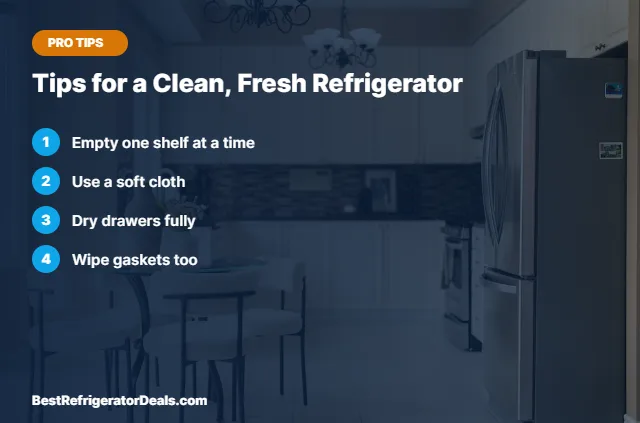
Tips for a Clean, Fresh Refrigerator
- Empty one shelf at a time. Keep food cold.
- Use a soft cloth. No scratches.
- Dry drawers fully. Prevent mold.
- Wipe gaskets too. Hidden grime.
Below are common questions readers ask about choosing the best fridge cleaner.
Frequently Asked Questions
What is the best fridge cleaner?
Oh Yuk for interiors, CleanSmart for disinfecting and Weiman for stainless doors.
Is it safe to use cleaners inside a fridge?
Use food-contact safe or no-rinse products, or rinse with clean water.
Can I use bleach in the fridge?
It is not recommended; it can leave odors and damage parts.
How often should I clean my fridge?
Wipe spills right away and deep clean every 3 to 4 months.
What cleans sticky fridge spills?
A warm, damp cloth and a fridge cleaner; let it sit a minute first.
How often should I clean refrigerator coils?
About once or twice a year, or every six months if you have pets.
Final Verdict
Oh Yuk Fridge Cleaner is the best fridge cleaner for interiors, with CleanSmart for food-safe disinfecting and Weiman for the stainless doors. Keep separate products inside and out, and the best fridge cleaner will leave everything fresh and safe.
Related Guides
More refrigerator research from Best Refrigerator Deals:
Prices and availability change often. Check the retailer listing for the current price, warranty and exact dimensions before you buy.