
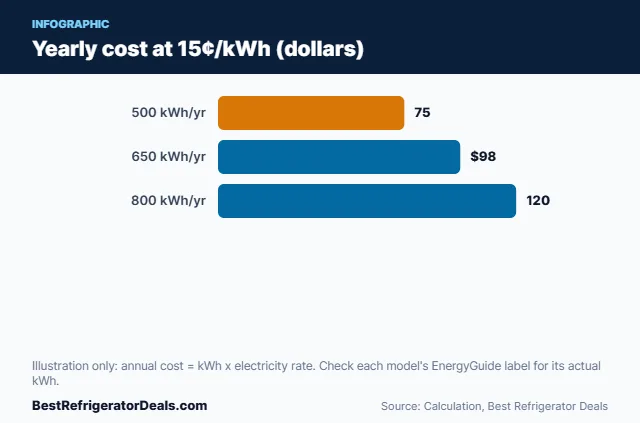
Choosing the best side by side refrigerator ENERGY STAR certified model is one of the easiest ways to cut long-term running costs. A refrigerator runs around the clock for a decade or more, so a difference of even 100 kWh per year adds up. ENERGY STAR certification tells you a model uses less energy than the federal minimum standard requires for its size and type.
This guide explains how certification works for side-by-side refrigerators, how to read the yellow EnergyGuide label, which features increase energy use, and how to keep any fridge efficient after it is installed. You can search the full list of certified models on the ENERGY STAR website.
Quick Answer: The Best Side by Side Refrigerator Energy Star
- What it meansUses less energy than the federal minimum for its class
- How to compareAnnual kWh on the EnergyGuide label
- Biggest energy addThrough-the-door ice and water dispensers
- Easy savingsClean coils, tight seals, correct temperatures
- Where to lookThe ENERGY STAR product finder and store listings
The best side by side refrigerator ENERGY STAR shoppers can buy is the certified model with the lowest annual kWh that still fits your space and capacity needs. Compare the EnergyGuide figure across your shortlist rather than relying on the label alone.
Energy Factors for Side-by-Side Refrigerators
| Factor | Effect on energy use | Tip |
|---|---|---|
| Through-door dispenser | Usually increases kWh | Skip it if you rarely use it |
| Larger capacity | Usually increases total kWh | Buy the size you need |
| Counter depth | Similar per cubic foot | Choose for fit, not efficiency |
| Room temperature | Warm rooms raise kWh | Keep away from ovens and sun |
| Door seals | Leaks waste energy | Test with a sheet of paper |
How the Best Side by Side Refrigerator ENERGY STAR Rating Works
Certified refrigerators must use less energy than the federal standard for their category, which accounts for size, layout and features like through-door ice. That means certification compares a side-by-side with other side-by-sides, not with a small top-freezer fridge.
Because certification is a threshold, two certified models can still differ in annual kWh. Always compare the EnergyGuide numbers.
Reading the EnergyGuide Label
Estimated yearly cost
Based on a national average electricity rate; your cost depends on your local rate.
Estimated yearly kWh
The best number for comparing models.
Cost range
Shows where the model sits among similar models.
ENERGY STAR logo
Appears on the label when the model is certified.
Features That Change Energy Use
Through-the-door dispensers create an opening in the freezer door that lets some cold escape, which is one reason they usually raise listed energy use. Ice makers also use energy to freeze and harvest ice.
Larger capacity naturally uses more total energy, though it can be efficient per cubic foot. Buy the capacity you will use rather than the biggest model available.
Standard Depth, Counter Depth and Efficiency
Counter-depth side-by-sides hold less food, so their total annual kWh is often a little lower, but per cubic foot they are usually similar to standard-depth models. Choose depth for fit and kitchen flow, then compare kWh within that group.
Similarly, a 33-inch model will usually use less total energy than a 36-inch one simply because it is smaller. If you do not need the extra capacity, a smaller certified fridge is the most efficient choice.
Should You Replace an Old Side-by-Side?
Refrigerators made 15 or more years ago often use noticeably more energy than current certified models of the same size. If your fridge is old, running poorly or kept as a second fridge in a garage, compare its estimated usage with a new certified model. Recycling an old unit through a utility program can also earn a rebate in some areas.
A plug-in electricity monitor can measure your current fridge’s real usage over a week, which makes the comparison much more accurate than guessing.
Keeping a Side-by-Side Efficient
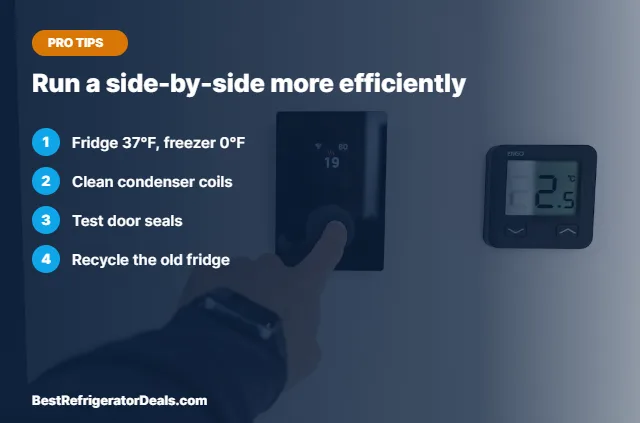
Set the fridge to about 37°F and the freezer to 0°F. Clean the condenser coils once or twice a year, keep the door seals clean, and avoid placing the fridge next to an oven or in direct sun. Leave the recommended clearance around the cabinet so heat can escape.
undefined
Rebates and Savings
Some utilities offer rebates for ENERGY STAR refrigerators or for recycling an old fridge. Search your utility’s website or the ENERGY STAR rebate finder before you buy.
undefined
How We Researched the Best Side by Side Refrigerator Energy Star
For this guide to the best side by side refrigerator energy star, we reviewed manufacturer specification sheets and ENERGY STAR data for current side-by-side refrigerators sold by major U.S. appliance brands, focusing on exact widths, heights and depths, capacity, freezer layout, dispenser features and listed annual energy use. Amazon does not sell most full-size side-by-side refrigerators, so this is a buying guide rather than a product roundup, and we do not rank individual models we could not verify.
We checked efficiency claims against ENERGY STAR refrigerator guidance and food-safety temperatures against the FDA’s food storage advice (40°F or colder in the fridge, 0°F in the freezer). Our full process is on our How We Test page. We do not list prices or star ratings because they change daily.
Energy-Saving Tips
- Recycle the old fridge. Running an old second fridge can cost more than you think.
- Let leftovers cool briefly. Then refrigerate within two hours.
- Keep it reasonably full. Thermal mass steadies temperatures.
- Check door seals yearly. Replace worn gaskets.
Below are common questions readers ask about choosing the best side by side refrigerator energy star.
Frequently Asked Questions
What is the best side by side refrigerator ENERGY STAR certified?
The certified model with the lowest annual kWh that fits your space and needs.
How much can ENERGY STAR save?
It depends on the model and your electricity rate; compare annual kWh to estimate savings.
Do dispensers use more energy?
Yes, models with through-door ice and water usually list higher kWh.
Where can I find certified models?
Use the ENERGY STAR product finder or filter store listings.
Are rebates available?
Some utilities offer rebates; check yours.
Final Verdict
The best side by side refrigerator ENERGY STAR certified for your home is the one with the lowest annual kWh that fits your space. Skip features you will not use, keep it maintained and look for local rebates.
Related Guides
More refrigerator research from Best Refrigerator Deals:
Specifications change between model years. Always confirm the exact dimensions, capacity and energy figures on the retailer or manufacturer page before you buy.